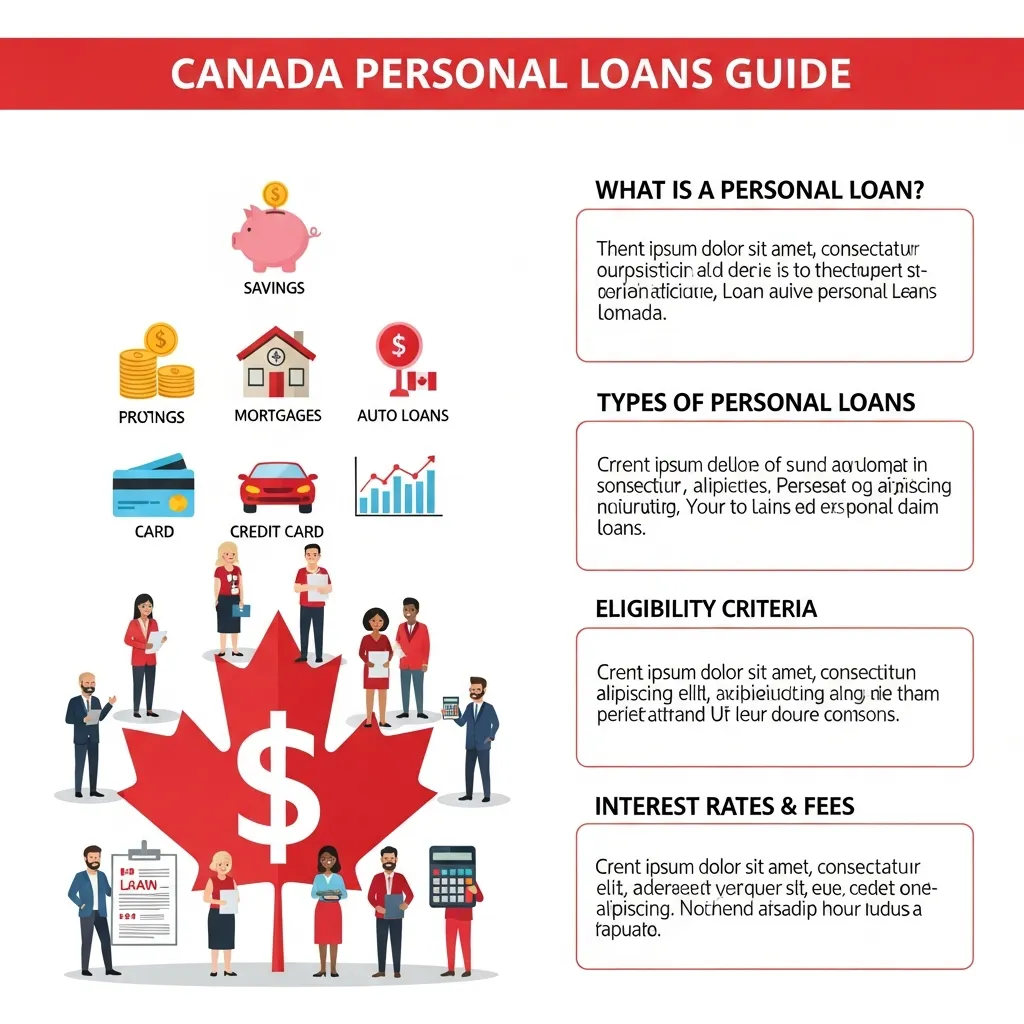

Personal loans are one of the most commonly used financial products in Canada. Whether you need funds for debt consolidation, medical expenses, education, home improvement, or unexpected costs, a personal loan can provide quick access to money with predictable repayment terms. However, understanding how personal loans work in Canada is essential to avoid high interest costs and financial stress.
This Canada personal loans guide explains the types of personal loans, eligibility requirements, interest rates, application process, risks, and tips to choose the right loan.
What Is a Personal Loan in Canada
A personal loan is a fixed amount of money borrowed from a bank, credit union, or online lender that is repaid over a set period with interest. Unlike credit cards, personal loans usually have fixed monthly payments and a defined repayment schedule.
Personal loans in Canada can be used for almost any purpose, making them flexible and convenient. Borrowers typically receive the loan amount as a lump sum and repay it in monthly installments.
Types of Personal Loans in Canada
There are different types of personal loans available depending on financial needs and credit profile.
Unsecured Personal Loans
Unsecured personal loans do not require collateral. Approval is based mainly on credit score, income, and financial history. These loans usually have higher interest rates compared to secured loans but are widely used for short-term and medium-term needs.
Secured Personal Loans
Secured personal loans require collateral such as a car, savings account, or other assets. Because the lender has security, interest rates are generally lower. These loans are suitable for borrowers who want lower rates or have limited credit history.
Fixed-Rate Personal Loans
Most personal loans in Canada have fixed interest rates. This means the monthly payment remains the same throughout the loan term, making budgeting easier and more predictable.
Variable-Rate Personal Loans
Variable-rate personal loans have interest rates that can change based on market conditions. Payments may fluctuate, which can be risky during periods of rising interest rates.
Common Uses of Personal Loans
Canadians use personal loans for many purposes. Debt consolidation is one of the most common uses, allowing borrowers to combine multiple high-interest debts into one lower-interest loan.
Other common uses include covering medical or dental expenses, funding education or skill development, paying for home renovations, or managing emergency expenses. Personal loans are also used for major life events such as weddings or relocation costs.
Eligibility Criteria for Personal Loans in Canada
Eligibility for personal loans depends on several factors. Lenders evaluate credit score, income, employment stability, and debt-to-income ratio.
A good credit score increases approval chances and helps secure lower interest rates. Stable income and employment history show lenders that the borrower can manage monthly payments. Some lenders also consider residency status, especially for newcomers to Canada.
Interest Rates and Fees
Interest rates on personal loans in Canada vary widely. Rates depend on credit score, loan amount, loan term, and lender type. Borrowers with strong credit usually qualify for lower rates, while those with poor or limited credit may face higher costs.
In addition to interest, some lenders charge origination fees, late payment fees, or early repayment penalties. Understanding the total cost of borrowing is essential before accepting a loan offer.
How to Apply for a Personal Loan in Canada
The personal loan application process in Canada is straightforward. Borrowers can apply through banks, credit unions, or online lenders.
The process usually includes submitting personal information, income details, employment history, and consent for a credit check. Once approved, funds are often deposited directly into the borrower’s bank account within a few days.
Comparing multiple offers before choosing a lender helps secure better terms and lower interest rates.
Personal Loans vs Credit Cards
Personal loans and credit cards serve different financial needs. Personal loans are better suited for large expenses with fixed repayment plans. Credit cards offer flexibility but usually carry higher interest rates.
Using a personal loan to pay off high-interest credit card balances can reduce interest costs and simplify repayments. However, discipline is required to avoid accumulating new credit card debt after consolidation.
Risks of Personal Loans
While personal loans are useful, they come with risks. Borrowing more than needed or choosing long loan terms can increase total interest paid. Missing payments can damage credit scores and lead to additional fees.
Secured loans carry the risk of losing collateral if payments are not made. Understanding these risks helps borrowers make responsible decisions.
Personal Loans for Newcomers to Canada
Newcomers may face challenges accessing personal loans due to limited Canadian credit history. Some banks and lenders offer newcomer programs with flexible criteria. Secured loans or smaller loan amounts may be easier to obtain initially.
Building credit through responsible use of credit cards and timely payments improves future loan options.
Tips to Choose the Best Personal Loan
Choosing the right personal loan requires careful evaluation. Borrowers should compare interest rates, fees, repayment terms, and lender reputation. Selecting a loan that fits monthly budget limits is essential for long-term financial health.
Reading loan agreements carefully and understanding repayment obligations helps avoid surprises.
Impact of Personal Loans on Credit Score
Personal loans can affect credit scores positively or negatively. Making on-time payments builds positive credit history, while missed payments harm credit scores. Maintaining a manageable loan balance and avoiding over-borrowing supports healthy credit management.
Final Thoughts
Personal loans are an important part of the Canadian financial system, offering flexibility and access to funds for various needs. This Canada personal loans guide highlights the importance of understanding loan types, costs, eligibility, and risks before borrowing.
By comparing lenders, borrowing responsibly, and managing repayments carefully, Canadians can use personal loans as a helpful financial tool rather than a burden. Smart borrowing supports financial stability and long-term success.